 Image 1 of 3
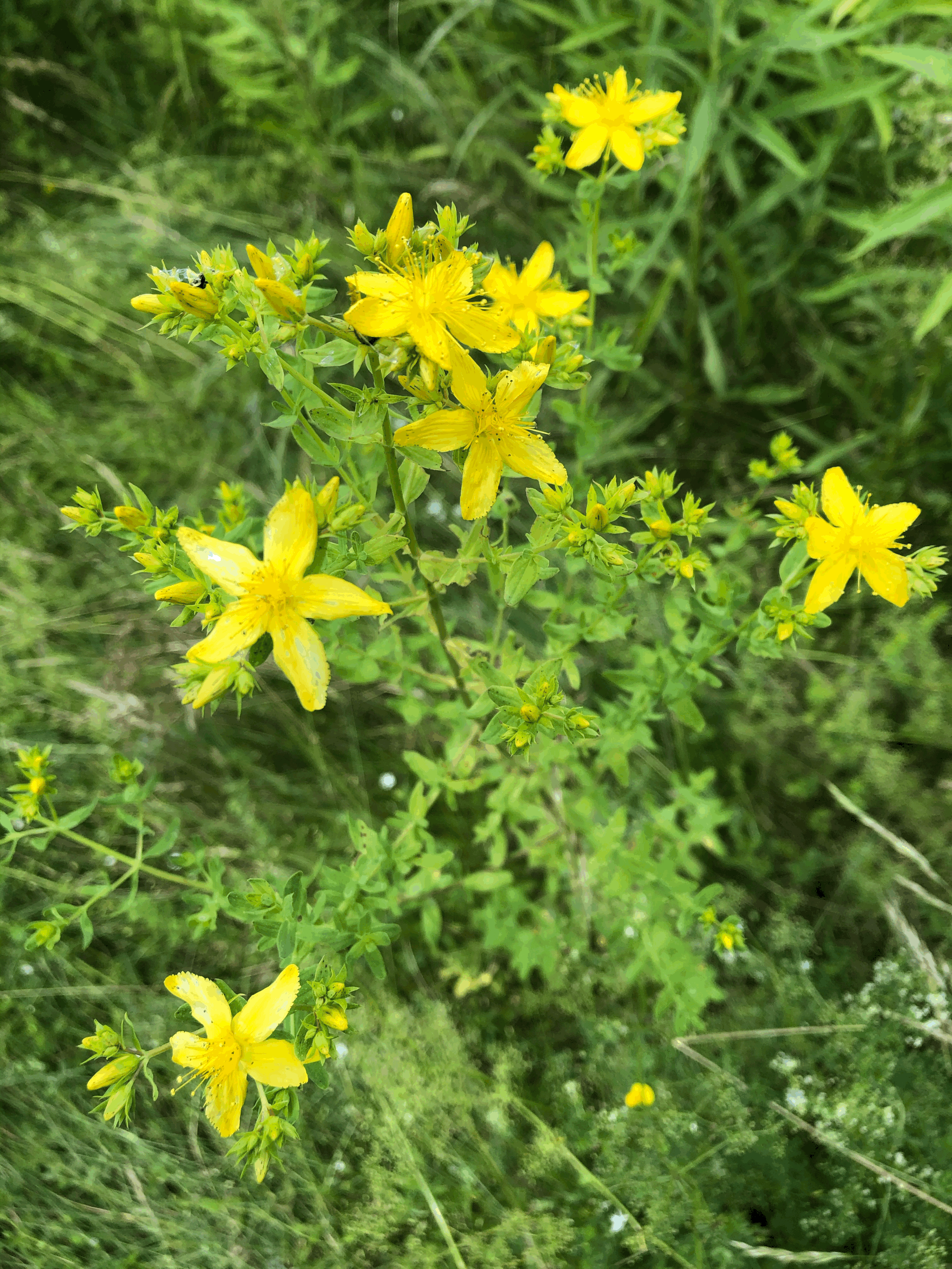 Image 2 of 3
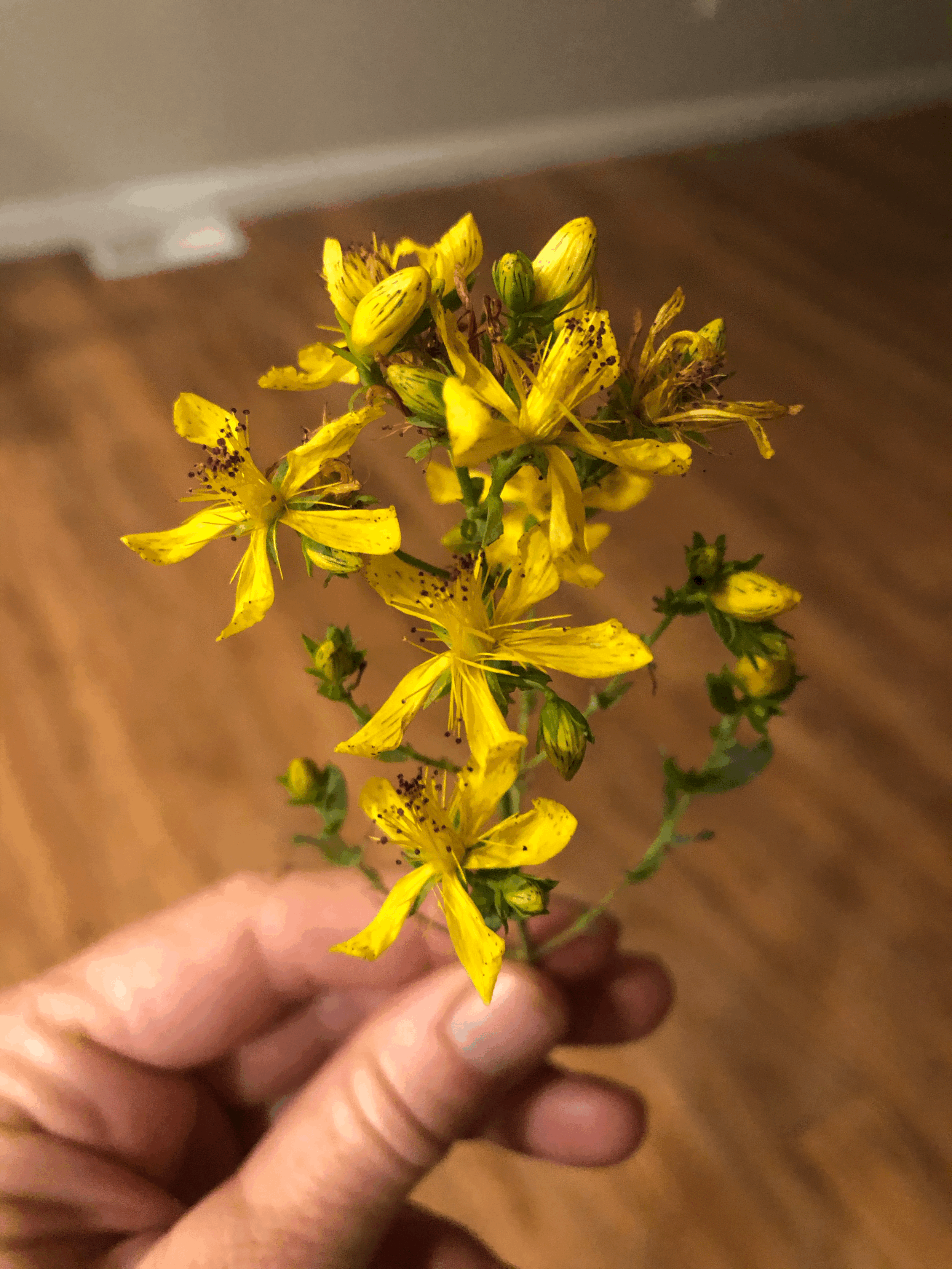 Image 3 of 3
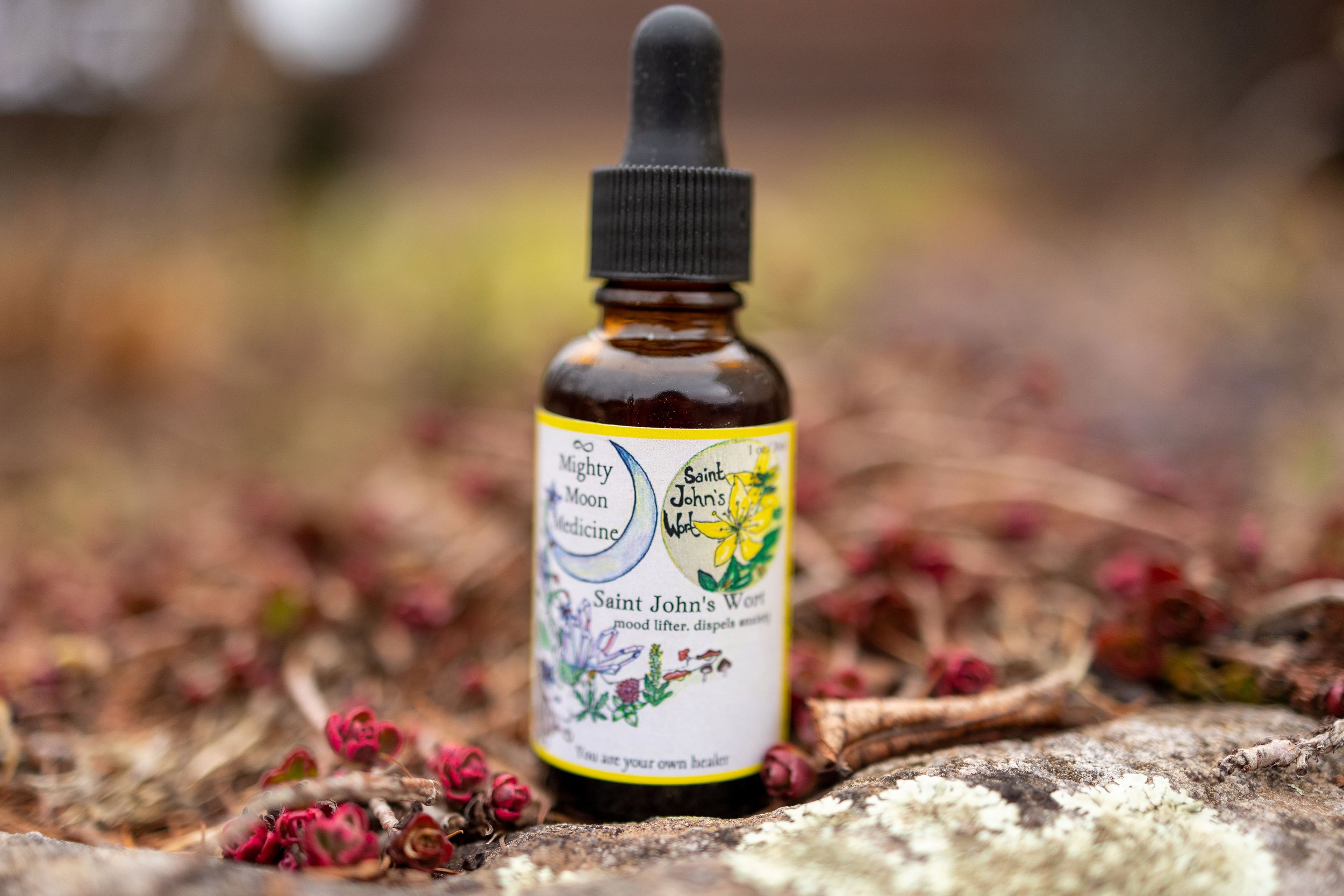
St. John’s wort (Hypericum perforatum)
Sunlight in a bottle. Saint John's Wort is capturing the strongest rays of summer.
She is a wonderful ally for lifting moods, relieving pain, and suppressing viruses.
She is your ally for the herpes virus.
She is your ally for anxiety and depression.
She is light and love. Ingredients: -Saint John's Wort fresh blooms -stems -leaves -vodka Ethically wildcrafted! NOTE: If you are taking pharmaceutical drugs, ask your doctor first!
A bit more about this wonderful herb:
Saint John’s wort is a flowering herb long used in traditional and modern herbal medicine. It contains active compounds such as hypericin, hyperforin, and flavonoids that are believed to influence neurotransmitter systems, inflammation, and wound healing.
Common benefits and evidence
Mild-to-moderate depression: Multiple randomized controlled trials and meta-analyses show St. John’s wort can be more effective than placebo and similarly effective to standard antidepressants for mild-to-moderate depression, often with fewer side effects. Evidence is strongest for hypericum extracts standardized for hypericin/hyperforin content.
Seasonal affective disorder (SAD): Some studies suggest benefit for mild seasonal mood changes, though data are less robust than for generalized mild-to-moderate depression.
Anxiety and nervousness: Preliminary evidence and traditional use support reductions in anxiety symptoms for some people, but results are mixed and less conclusive than for depression.
Menopausal mood symptoms: Some studies report improvements in mood and sleep for menopausal women when used alone or combined with other herbs; evidence varies.
Wound healing and topical use: Historically used topically to support minor wound healing, burns, and bruises. Limited clinical evidence supports topical anti-inflammatory and tissue-healing effects.
Antiviral and anti-inflammatory effects: In vitro and animal studies show antiviral and anti-inflammatory activities for certain constituents, but clinical relevance in humans is not well established.
Who may benefit most
People with mild-to-moderate depressive symptoms seeking botanical alternatives may find St. John’s wort effective.
Those with mild seasonal mood shifts or certain menopausal mood complaints may experience benefit.
Topical use may help minor skin injuries or inflammation.
Consult a healthcare provider before starting St. John’s wort if you take prescription medications, are pregnant or breastfeeding, or have a complex medical history.
St. John’s wort (Hypericum perforatum)
Sunlight in a bottle. Saint John's Wort is capturing the strongest rays of summer.
She is a wonderful ally for lifting moods, relieving pain, and suppressing viruses.
She is your ally for the herpes virus.
She is your ally for anxiety and depression.
She is light and love. Ingredients: -Saint John's Wort fresh blooms -stems -leaves -vodka Ethically wildcrafted! NOTE: If you are taking pharmaceutical drugs, ask your doctor first!
A bit more about this wonderful herb:
Saint John’s wort is a flowering herb long used in traditional and modern herbal medicine. It contains active compounds such as hypericin, hyperforin, and flavonoids that are believed to influence neurotransmitter systems, inflammation, and wound healing.
Common benefits and evidence
Mild-to-moderate depression: Multiple randomized controlled trials and meta-analyses show St. John’s wort can be more effective than placebo and similarly effective to standard antidepressants for mild-to-moderate depression, often with fewer side effects. Evidence is strongest for hypericum extracts standardized for hypericin/hyperforin content.
Seasonal affective disorder (SAD): Some studies suggest benefit for mild seasonal mood changes, though data are less robust than for generalized mild-to-moderate depression.
Anxiety and nervousness: Preliminary evidence and traditional use support reductions in anxiety symptoms for some people, but results are mixed and less conclusive than for depression.
Menopausal mood symptoms: Some studies report improvements in mood and sleep for menopausal women when used alone or combined with other herbs; evidence varies.
Wound healing and topical use: Historically used topically to support minor wound healing, burns, and bruises. Limited clinical evidence supports topical anti-inflammatory and tissue-healing effects.
Antiviral and anti-inflammatory effects: In vitro and animal studies show antiviral and anti-inflammatory activities for certain constituents, but clinical relevance in humans is not well established.
Who may benefit most
People with mild-to-moderate depressive symptoms seeking botanical alternatives may find St. John’s wort effective.
Those with mild seasonal mood shifts or certain menopausal mood complaints may experience benefit.
Topical use may help minor skin injuries or inflammation.
Consult a healthcare provider before starting St. John’s wort if you take prescription medications, are pregnant or breastfeeding, or have a complex medical history.